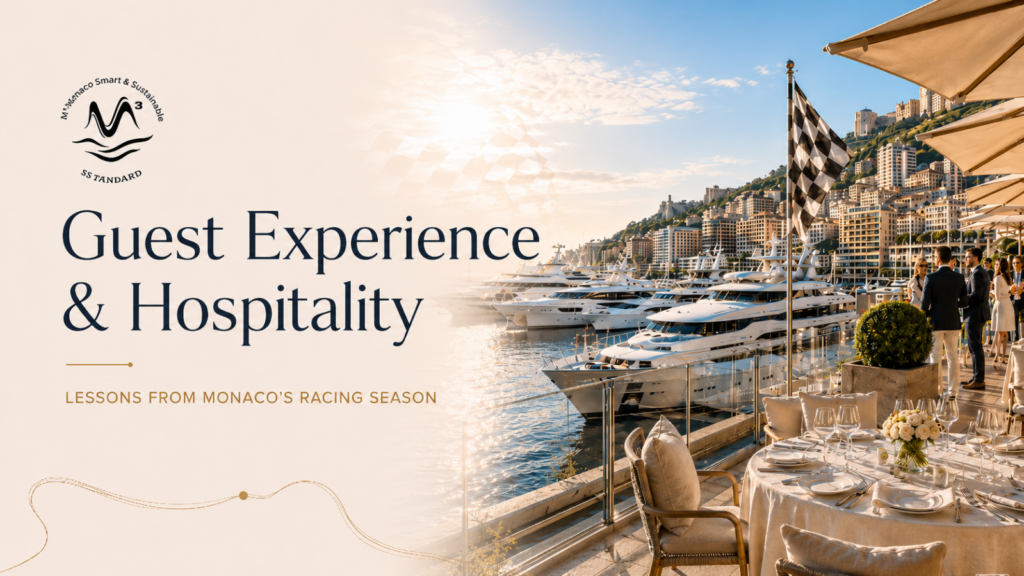
Monaco has just completed one of the most intense periods of its annual calendar.
From the Grand Prix de Monaco Historique, held from 24 to 26 April, to the Monaco E-Prix on 16 and 17 May, and the Formula 1 Grand Prix on 7 June, the Principality has once again operated under exceptional pressure. For several weeks, Monaco’s waterfront, hotels, restaurants, yacht clubs, marinas and hospitality venues became part of a highly demanding event ecosystem.
These events are not only sporting highlights. They are full-scale demonstrations of how a destination performs when expectations are at their highest. For yacht clubs and marinas, the lesson is clear: customer experience and hospitality are not secondary considerations. They are strategic functions that directly influence reputation, member satisfaction, operational performance and financial value.
Events as a Strategic Tool
For a yacht club, event programming is one of the most important ways to create value for members.
A well-designed events calendar strengthens the sense of belonging, reinforces the identity of the club and creates opportunities for members to experience the club beyond its daily services. During major events such as the Monaco Grand Prix, programming becomes even more strategic. Members expect exclusivity, access, atmosphere and service. Guests expect clarity, elegance and seamless execution. Sponsors and partners expect visibility and professionalism.
This requires more than hosting lunches, receptions or viewing opportunities. A successful event program must consider the full journey: invitation, registration, access, arrival, welcome, seating, hospitality, networking, entertainment, security, departure and follow-up.
When managed well, events become a powerful expression of a yacht club’s culture. They create memories, strengthen loyalty and reinforce the perceived value of membership. When managed poorly, they create frustration, confusion and reputational risk.
The Economic Value of Major Events
Beyond visibility and member engagement, major events can also generate significant economic impact.
The Monaco Grand Prix provides a clear example. Local newspaper Nice-Matin recently reported that, without disclosing exact figures, Stéphane Valeri, Président-Délégué of the Monte-Carlo Société des Bains de Mer, described the 83rd Formula 1 Grand Prix as an “excellent cru” for the group, with results above expectations. The article also referred to turnover being multiplied by six or seven during the Grand Prix period.
For yacht clubs and marinas, this highlights an important point: event programming is not only a communication tool. It can become a real driver of value.
Major events can support additional revenue through hospitality, member events, temporary services, premium berthing, catering, partnerships, sponsorships and event-related packages. They can also increase destination visibility, attract new audiences and strengthen relationships with members, owners, captains, brands and institutional partners.
However, this opportunity only exists if the operational foundation is strong. Poorly managed access, unclear communication, weak people flow, inconsistent service or insufficient staff preparation can quickly undermine both the guest experience and the commercial potential of the event.
The financial impact of major events therefore depends directly on the quality of execution.
Hospitality Is a Management Discipline
Customer experience in a yacht club or marina environment is often associated with service. But during major events, it becomes much broader.
It is the way a member receives information before arrival. It is the way a guest is welcomed at the entrance. It is the way a captain is briefed on access or restrictions. It is the way staff manage pressure without transferring it to the client.
The best experience is often the one where complexity remains invisible.
Behind a smooth guest journey, there are detailed procedures, staff briefings, contingency plans, clear communication channels and strong coordination between teams. Hospitality is not improvised. It is designed, trained and managed.
This is especially important in premium environments, where expectations are high and tolerance for friction is low.
Staff Training and People Flow
One of the strongest lessons from major events is the importance of staff preparation.
During high-profile periods, teams are exposed to demanding clients, last-minute changes, intense working hours and complex logistics. Training should therefore go beyond technical tasks. It should include attitude, discretion, communication, escalation procedures and stress management.
Staff must know who is responsible for what, how to respond to difficult requests, how to communicate restrictions and when to escalate an issue.
People flow is equally critical.
A yacht club or marina may have excellent facilities, but if circulation is poorly managed, the experience quickly deteriorates. Congestion at entrances, unclear signage, delays at reception, overcrowded hospitality areas or confusion between members, guests, suppliers and crews can affect the entire perception of the event. In a high-end environment, clarity is part of hospitality.
The Marina Under Event Pressure
For a marina, major events create a different but equally demanding set of responsibilities.
During periods such as the Formula 1 Grand Prix, berth organisation becomes highly strategic. Demand increases, vessel profiles change, guest movements intensify and operational constraints multiply. When the circuit is located close to the marina, safety and access control become even more critical.
The marina must manage berth allocation, vessel movements, supplier access, crew communication, emergency readiness and coordination with local authorities. At the same time, it must maintain a high level of service for owners, captains and guests.
Security measures must be strong, but not hostile. Operational restrictions must be clear, but not confusing. Guest experience must remain premium, even when the environment is highly controlled.
A well-managed marina makes complexity feel simple.
Why This Matters for S3
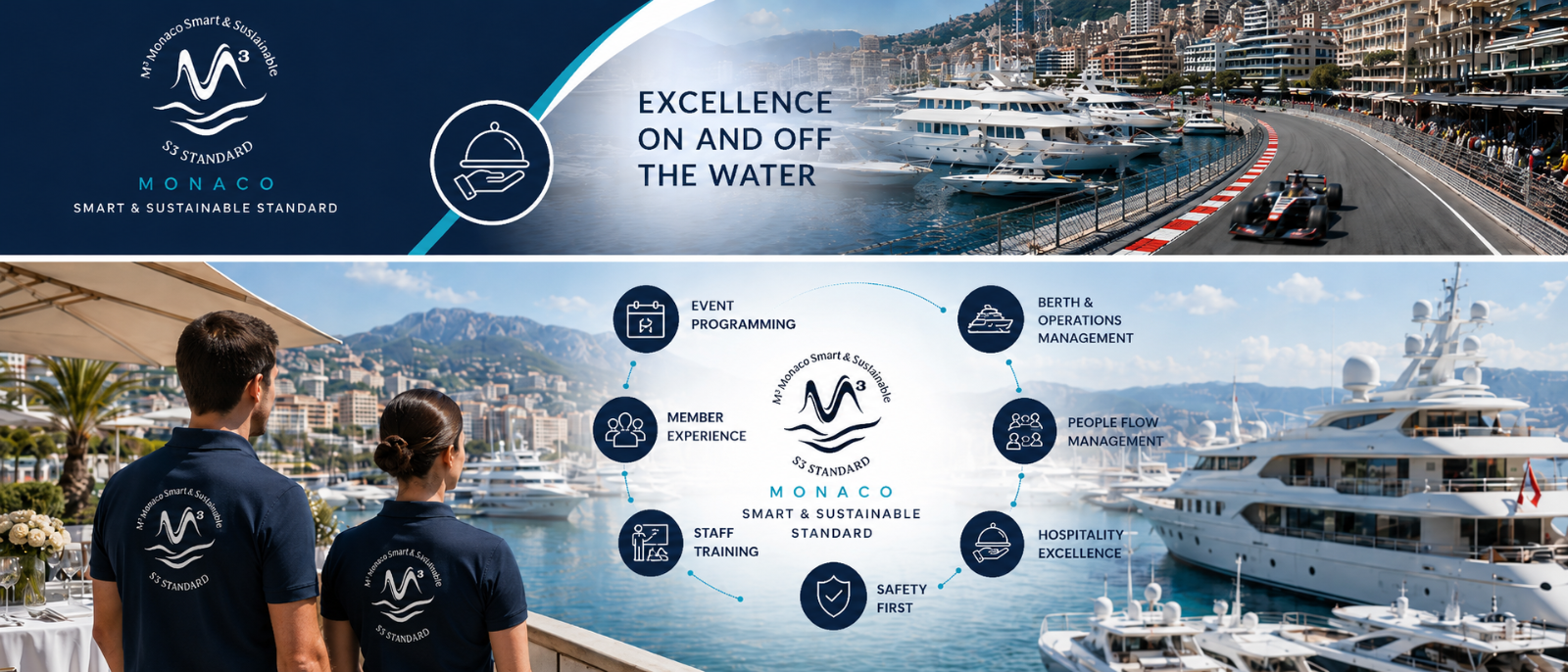
The Customer Experience & Hospitality pillar of the S3 Monaco Smart & Sustainable Standard recognises that modern waterfront destinations are not judged only by infrastructure, environmental performance or technical capacity. They are also judged by the quality, consistency and reliability of the experience they provide.
For yacht clubs, this includes event programming, member engagement, hospitality standards, staff training and the ability to create a strong community experience. For marinas, it includes berth management, captain communication, guest reception, safety coordination, supplier access and operational responsiveness.
This pillar is not about luxury for the sake of luxury. It is about structured excellence.
It asks whether an organisation is able to anticipate needs, manage pressure, align teams and deliver a coherent experience across every touchpoint.
From Exceptional Events to Everyday Standards
Monaco’s racing season is exceptional, but the lessons are relevant to any marina or yacht club.
Every waterfront destination faces moments of pressure: peak season, regattas, VIP arrivals, private events, weather disruption, technical incidents or sudden changes in demand. These moments reveal whether the organisation is truly prepared.
The strongest operators use events not only as showcases, but as learning opportunities. They refine procedures, train teams, improve communication, test people flow, strengthen safety protocols and better understand member and guest expectations.
For marinas and yacht clubs, customer experience is no longer a soft concept. It is a strategic pillar of performance, reputation and long-term value.
And in a world where expectations continue to rise, the ability to deliver excellence under pressure may become one of the strongest differentiators of all.
Article first published on Smart Marina Connect.